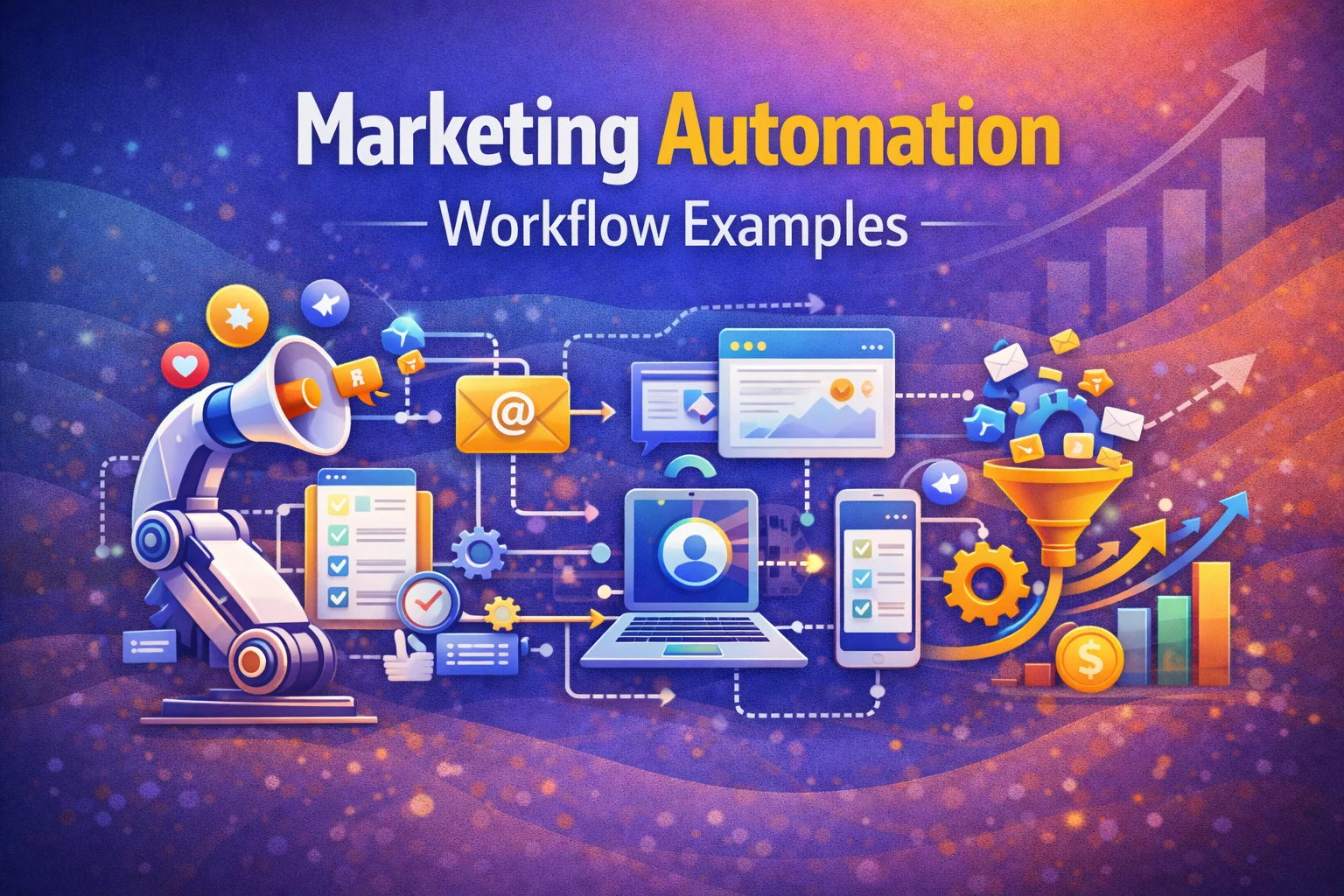
Marketing automation is essential for streamlining repetitive tasks, nurturing leads, and creating personalized experiences for your audience. By implementing the right workflows, businesses can save time, improve engagement, and increase ROI. Below are some practical marketing automation workflow examples used by successful businesses.
What is a Marketing Automation Workflow?
A marketing automation workflow is a series of automated actions triggered by specific events or behaviors. These workflows help businesses engage with leads or customers at the right time with the right message.
Benefits of Marketing Automation Workflows:
Saves time by automating repetitive tasks
Delivers personalized content at scale
Improves lead nurturing and conversion rates
Provides actionable analytics for optimization
Enhances customer retention
Top Marketing Automation Workflow Examples
1. Welcome Email Workflow
Purpose: Introduce new subscribers and guide them through your brand.
Workflow Steps:
Trigger: User subscribes to newsletter.
Send a welcome email immediately.
Send a follow-up email after 2-3 days with a free resource or guide.
Send a third email highlighting popular products or services after one week.
Example Tools: Mailchimp, HubSpot, ActiveCampaign
Result: Increases engagement and builds trust with new subscribers.
2. Abandoned Cart Workflow (E-commerce)
Purpose: Recover lost sales by reminding users of items left in their cart.
Workflow Steps:
Trigger: User adds products to the cart but doesn’t complete purchase.
Send an email reminder after 1 hour.
Send a follow-up email after 24 hours with a limited-time discount.
Send a final email after 48 hours with urgency messaging (“Last chance to buy!”).
Example Tools: Shopify + Klaviyo, WooCommerce + Moosend
Result: Boosts conversions and recovers potentially lost revenue.
3. Lead Nurturing Workflow
Purpose: Guide prospects through the buyer journey.
Workflow Steps:
Trigger: Prospect downloads a lead magnet or signs up for a webinar.
Send an email thanking them and providing additional resources.
Send educational content over the next 1-2 weeks.
Send a personalized sales offer once the prospect engages with multiple emails.
Example Tools: HubSpot, ActiveCampaign
Result: Converts leads into paying customers with consistent, targeted messaging.
4. Re-Engagement Workflow
Purpose: Win back inactive subscribers or customers.
Workflow Steps:
Trigger: User hasn’t opened emails or purchased in 60-90 days.
Send a personalized email asking if they are still interested.
Offer incentives like discounts or free resources.
Remove unengaged users from the email list if there’s no response.
Example Tools: Mailchimp, Sendinblue
Result: Improves list health and boosts engagement metrics.
5. Customer Onboarding Workflow
Purpose: Ensure new customers understand and use your product or service effectively.
Workflow Steps:
Trigger: Customer completes purchase.
Send a welcome email with setup instructions.
Send a series of educational emails highlighting key features over 7-14 days.
Ask for feedback or encourage product reviews after a few weeks.
Example Tools: GetResponse, Salesforce Marketing Cloud
Result: Reduces churn and increases customer satisfaction.
6. Event or Webinar Registration Workflow
Purpose: Automate event sign-ups and reminders.
Workflow Steps:
Trigger: User registers for an event or webinar.
Send a confirmation email immediately.
Send reminder emails 1 week, 1 day, and 1 hour before the event.
Send a follow-up email after the event with a recording or additional resources.
Example Tools: HubSpot, ActiveCampaign
Result: Maximizes attendance and engagement with events.
7. VIP or Loyalty Program Workflow
Purpose: Reward loyal customers and encourage repeat purchases.
Workflow Steps:
Trigger: Customer reaches a specific spending threshold.
Send a personalized congratulations email.
Offer exclusive discounts, early access, or special gifts.
Encourage social sharing or referrals.
Example Tools: Klaviyo, Salesforce Marketing Cloud
Result: Increases customer lifetime value and retention.
Tips for Creating Effective Marketing Automation Workflows
Segment Your Audience: Tailor workflows based on user behavior, demographics, or interests.
Personalize Content: Use the recipient’s name, preferences, and past behavior.
Test and Optimize: A/B test subject lines, email content, and timing.
Monitor Metrics: Track open rates, click-through rates, conversions, and ROI.
Avoid Over-Automation: Ensure workflows feel personal and relevant.
Conclusion
Marketing automation workflows are a powerful tool for businesses of all sizes. From welcoming new subscribers to recovering abandoned carts and nurturing leads, these workflows streamline your marketing efforts while boosting engagement and conversions. By implementing these marketing automation workflow examples, you can save time, improve efficiency, and deliver a superior customer experience.