Introduction to Digital Marketing
What Is Digital Marketing?
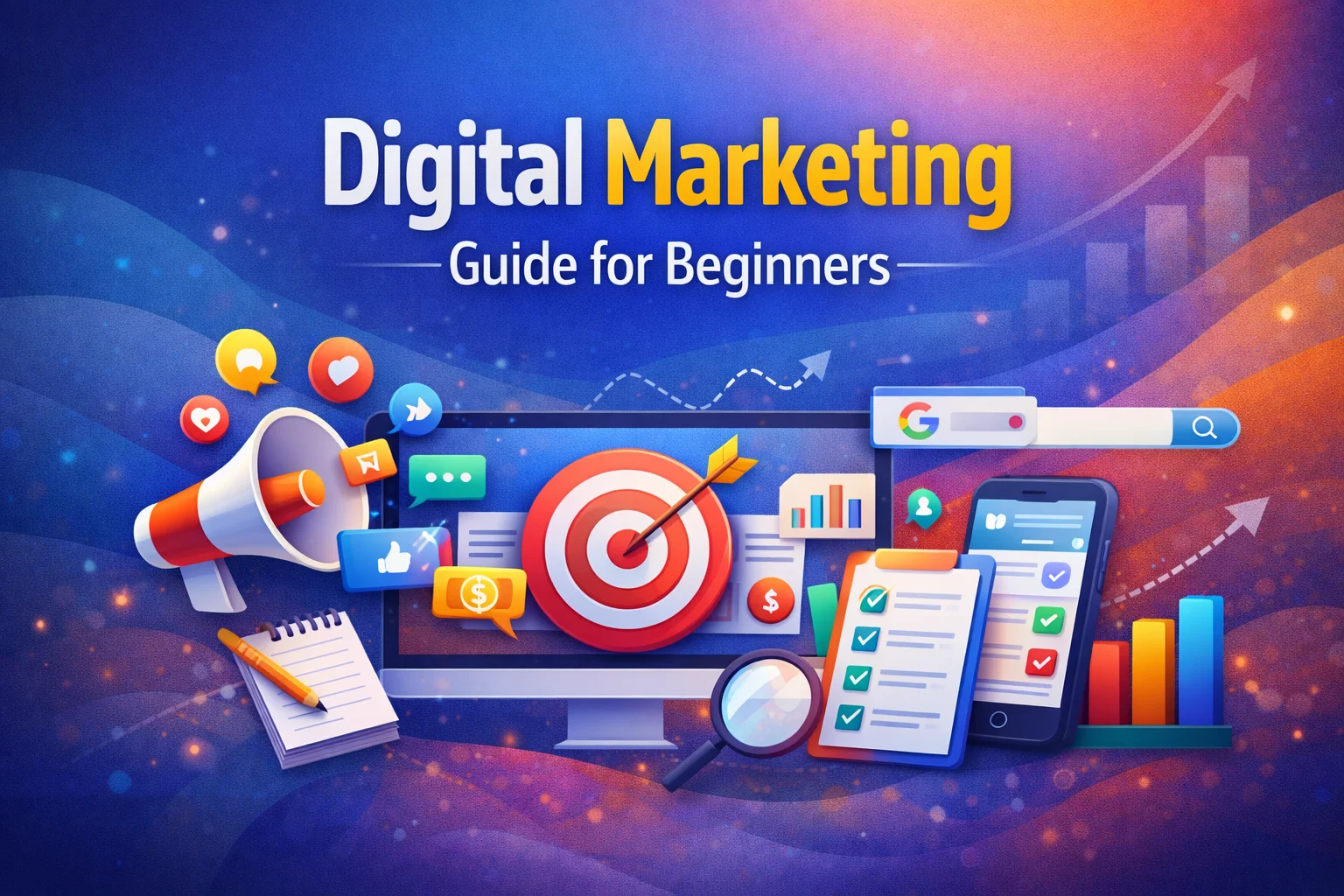
Digital marketing is all about using the internet and digital tools to promote products, services, and brands. You’ve probably seen online ads, Instagram posts, or emails from brands—those are all part of digital marketing.
Why Digital Marketing Matters Today
Think about how often people use their phones or search Google. Digital marketing gives you the power to reach people exactly where they spend most of their time—online. It also helps businesses grow faster, even with small budgets.
How Digital Marketing Works
Digital marketing works through different channels such as SEO, social media, websites, paid ads, and emails. Each channel has a unique role but all work together to build brand awareness, generate leads, and increase sales.
Core Components of Digital Marketing
Search Engine Optimization (SEO)
SEO helps your website appear higher in Google search results. The higher you rank, the more traffic you get.
On-Page SEO Basics
Use keywords naturally
Write high-quality content
Add proper headings
Optimize images
Off-Page SEO Basics
Build backlinks
Engage on social media
Collaborate with influencers
Technical SEO
Improve site speed
Enable mobile responsiveness
Fix broken links
Use HTTPS for security
Social Media Marketing (SMM)
Social media platforms like Facebook, Instagram, TikTok, and LinkedIn help businesses connect directly with their audience. You can build brand awareness, run ads, or engage with customers instantly.
Content Marketing
Content is the foundation of digital marketing. Blogs, videos, podcasts, infographics, and ebooks help businesses educate their audience and build trust.
Email Marketing
Email marketing is still one of the most powerful tools. You can send newsletters, promotions, and product updates directly to your audience’s inbox.
Pay-Per-Click Advertising (PPC)
PPC includes paid ads on Google, Facebook, and other platforms. You only pay when someone clicks on your ad—making it cost-efficient and effective when done right.
Understanding Digital Marketing Channels
Organic vs. Paid Channels
Organic includes SEO, social media posts, blogs.
Paid includes Google Ads, Facebook Ads, sponsored posts.
Both are important and work best together.
Website as a Marketing Hub
Your website is your online office. It should be:
Fast
Mobile-friendly
Easy to navigate
Filled with helpful content
Mobile Marketing
Since most people use mobile phones, campaigns must be optimized for smaller screens. SMS marketing, mobile ads, and app-based marketing are all powerful tools.
Digital Marketing Strategy for Beginners
Setting SMART Goals
Your goals should be:
Specific
Measurable
Achievable
Relevant
Time-bound
For example: “Get 1,000 website visitors in 30 days.”
Understanding Your Audience
Know your audience’s:
Age
Location
Interests
Problems
This helps you create better content and ads.
Competitor Research
Study your competitors’:
Websites
Keywords
Social media
Ads
This helps you understand what works and what you can improve.
Budget Planning
Decide how much you can spend on ads, tools, and content creation. Start small and scale as you learn what works.
Tools Every Beginner Should Use
Free SEO Tools
Google Keyword Planner
Ubersuggest
Google Search Console
Yoast SEO
Social Media Tools
Buffer
Hootsuite
Canva
Meta Business Suite
Content Creation Tools
Canva
Grammarly
ChatGPT
Google Docs
Analytics Tools
Google Analytics
Facebook Insights
Hotjar
Common Mistakes Beginners Should Avoid
Ignoring Analytics
Marketing without analytics is like driving with your eyes closed. Always track performance so you know what to improve.
Not Being Consistent
Consistency is the backbone of digital marketing. Post regularly, optimize regularly, learn regularly.
Targeting Everyone
If you target everyone, you reach no one. Be specific about who you want to reach.
Conclusion
Digital marketing may seem complex at first, but once you understand the basics and follow a clear strategy, it becomes one of the most powerful ways to grow a business. With the right tools, consistency, and a focus on your audience, anyone can master it—even beginners. Start small, learn every day, and you’ll be surprised at how fast your digital presence grows.
FAQs
1. Is digital marketing easy to learn?
Yes, anyone can learn digital marketing with consistent practice and the right resources.
2. How long does it take to learn digital marketing?
Most beginners understand the basics within 2–3 months, but mastering it takes longer.
3. Do I need money to start digital marketing?
You can start with free tools and organic methods, then invest gradually in ads.
4. Can digital marketing get me a job?
Absolutely. Digital marketing is one of the fastest-growing career fields worldwide.
5. Which digital marketing skill should I learn first?
Start with SEO and social media marketing—they form the foundation.