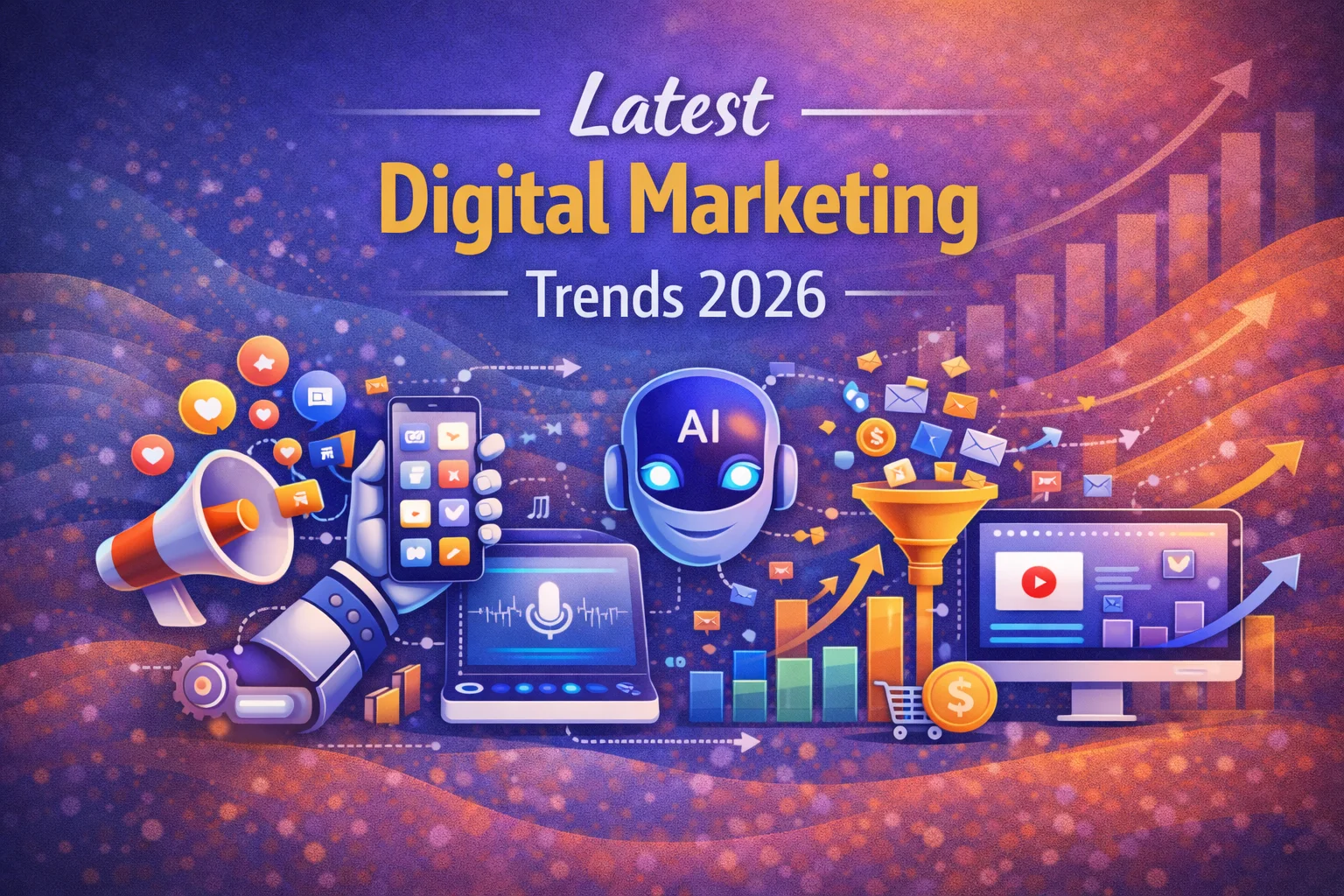
The digital marketing landscape is evolving faster than ever. With technological advancements, changing consumer behavior, and AI-driven tools, businesses must stay up-to-date to remain competitive. Understanding the latest digital marketing trends 2025 will help marketers, entrepreneurs, and businesses craft strategies that maximize engagement, conversions, and ROI.
This article explores the most impactful digital marketing trends for 2025 and how to leverage them effectively.
Why Staying Updated with Digital Marketing Trends Matters
Consumer behavior evolves quickly: New technologies and platforms change how people interact with brands.
Competitive advantage: Early adoption of trends can position your business ahead of competitors.
Better ROI: Modern strategies like AI automation and personalized campaigns improve efficiency.
Enhanced customer experience: Trends focus on delivering personalized, engaging, and frictionless interactions.
Top Digital Marketing Trends for 2025
1. AI-Powered Marketing
Artificial intelligence continues to dominate marketing strategies in 2025. AI helps businesses personalize campaigns, predict customer behavior, and automate repetitive tasks.
Applications:
AI chatbots for customer support
Predictive analytics for targeting campaigns
AI-generated content for blogs, emails, and social media
Personalized product recommendations
Example: E-commerce stores using AI to suggest products based on user behavior, boosting conversion rates.
2. Voice Search Optimization
With the growing popularity of smart speakers and voice assistants, optimizing content for voice search is essential.
Action Steps:
Focus on conversational keywords and long-tail phrases.
Answer FAQs directly on your website.
Optimize local SEO for “near me” searches.
Impact: Enhances discoverability and aligns with evolving user behavior.
3. Video Marketing Dominance
Video content remains one of the most engaging formats for audiences. In 2025, short-form videos, live streaming, and interactive videos are crucial.
Trends to Watch:
Short-form videos on TikTok, Instagram Reels, and YouTube Shorts
Interactive video ads that allow clicks or responses
Live streaming for product launches, webinars, and Q&A sessions
Tip: Keep videos concise, informative, and visually appealing to maximize engagement.
4. Personalization at Scale
Consumers expect personalized experiences in every interaction. Using data-driven marketing, brands can tailor messages, offers, and experiences individually.
Techniques:
Dynamic website content based on user behavior
Personalized email campaigns
AI-driven product recommendations
Retargeting ads with personalized messaging
Impact: Higher engagement, increased loyalty, and improved conversion rates.
5. Omnichannel Marketing
Omnichannel marketing integrates multiple channels — social media, email, websites, apps, and offline touchpoints — to deliver a seamless user experience.
Best Practices:
Consistent branding and messaging across all channels
Track user journey to provide relevant touchpoints
Use marketing automation tools to manage campaigns
Result: Customers receive a cohesive experience that increases trust and conversions.
6. Augmented Reality (AR) and Virtual Reality (VR)
AR and VR are revolutionizing digital marketing by creating immersive experiences.
Applications:
Virtual product trials for e-commerce
Interactive AR ads for mobile devices
VR brand experiences for events and showcases
Example: Furniture stores allowing customers to visualize products in their home using AR apps.
7. Sustainability and Social Responsibility Marketing
Consumers in 2025 increasingly prefer brands that demonstrate environmental consciousness and social responsibility.
Action Steps:
Highlight sustainable practices in marketing campaigns
Promote social initiatives and community involvement
Use eco-friendly messaging to attract conscious consumers
Impact: Builds brand trust and strengthens customer loyalty.
8. Privacy-First Marketing
With stricter privacy laws and increasing consumer awareness, marketers need to adapt to a privacy-first approach.
Best Practices:
Focus on first-party data collection
Transparent privacy policies and consent management
Contextual advertising instead of intrusive tracking
Impact: Improves customer trust while complying with regulations like GDPR and CCPA.
9. Influencer and Micro-Influencer Marketing
Influencer marketing remains relevant, but micro-influencers are gaining more trust and engagement than traditional celebrities.
Action Steps:
Partner with niche influencers for authentic campaigns
Track engagement and ROI, not just follower count
Use influencer content across your marketing channels
Example: A skincare brand collaborating with micro-influencers for honest product reviews.
10. Automation and Marketing Tools Integration
Marketing automation tools are essential to manage campaigns efficiently. Integrating AI, CRM, email marketing, and analytics platforms streamlines workflows.
Benefits:
Save time and reduce repetitive tasks
Personalize campaigns automatically
Track performance in real-time
Scale campaigns without extra resources
Popular Tools: HubSpot, ActiveCampaign, SEMrush, Jasper AI
How to Leverage These Trends for Your Business
Start with AI and automation to save time and increase personalization.
Focus on video and immersive content to boost engagement.
Optimize for voice search and omnichannel experiences to reach users across devices.
Emphasize sustainability and transparency to build trust.
Invest in analytics to track trends and adapt campaigns quickly.
Conclusion
The latest digital marketing trends 2025 highlight the importance of AI, personalization, immersive experiences, privacy, and multi-channel strategies. Businesses that adopt these trends can gain a competitive edge, increase engagement, and improve ROI.
By staying updated and applying these strategies, marketers can ensure their campaigns are effective, modern, and aligned with evolving consumer expectations