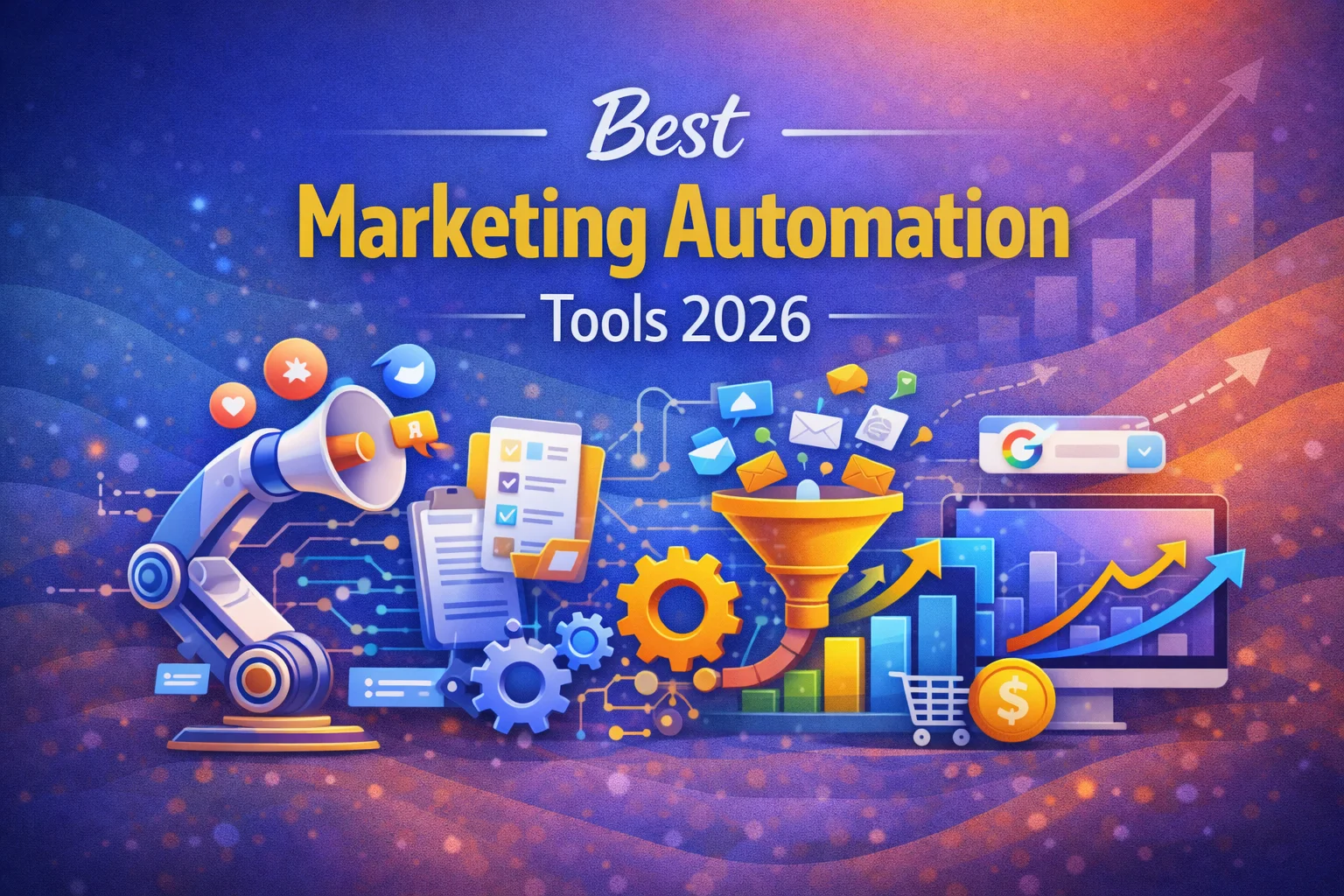
In 2025, marketing automation has become more essential than ever. As businesses compete online — from small e‑commerce shops to large enterprises — automating marketing tasks saves time, reduces errors, and enables more personalized, data‑driven campaigns. If you want to stay ahead, choosing the right automation tool is key.
In this article, we review the top marketing automation tools for 2025, outline their strengths and what kinds of businesses they suit best, and offer guidance on how to pick the ideal one for your needs.
Why Use Marketing Automation Tools
Marketing automation tools help businesses:
Automate repetitive tasks (emails, follow-ups, segmentation) — saving time and effort.
Deliver personalized messages based on user behavior or demographics.
Manage and nurture leads automatically through workflows / drip campaigns.
Track customer journeys, monitor analytics, and get insights on performance.
Scale marketing operations without needing a large team.
All these make automation tools indispensable for modern digital marketing.
Top Marketing Automation Tools in 2025
Here are some of the best and most recommended marketing automation platforms in 2025, across different business needs (SMB, e‑commerce, enterprise, etc.):
HubSpot Marketing Hub
Why it stands out: A leading all‑in‑one marketing + CRM + sales platform — widely regarded as the “safe bet” for businesses wanting a unified system.
Key Features:
Visual workflow builder for lead nurturing and marketing automation.
Deep CRM integration — manage contacts, leads, marketing, and sales from a single dashboard.
Automation templates, dynamic lists, content/email automation, analytics & reporting.
Best For: SMBs to mid‑market companies and agencies that want a comprehensive marketing + CRM + sales solution.
ActiveCampaign
Why it stands out: Excellent balance of power and affordability — especially strong for email automation, customer journeys, segmentation, and small-to-medium businesses.
Key Features:
Advanced automation workflows — triggers, behavior‑based emails, conditional logic.
Built-in CRM, multi-channel support (email, SMS, site messaging), lead tracking & scoring.
Customizable customer journeys and automation flows that adapt to user behavior.
Best For: Small to mid-sized businesses, startups — especially those with heavy reliance on email marketing and wish to grow without large budgets.
Mailchimp
Why it stands out: Originally an email tool, but now a full‑fledged marketing automation platform — simple, intuitive, and beginner‑friendly.
Key Features:
Drag‑and‑drop email builder, pre-built email workflows, audience segmentation, A/B testing.
Landing pages, basic CRM features, and social media tools included.
Free or low-cost plans for small businesses or startups, making it accessible.
Best For: Freelancers, small businesses, or beginners who want to start with marketing automation without complexity or high cost.
Omnisend (and similar e‑commerce‑focused tools)
Why it stands out: Built with e‑commerce in mind — automation across channels (email, SMS, push), ecommerce workflows (cart recovery, segmentation), and simple-to-use tools for small online stores
Key Features:
Omnichannel marketing: email, SMS, push notifications, and more — all in one place.
E‑commerce specific workflows: abandoned cart recovery, product recommendation emails, segmentation by shopping behavior.
Affordable pricing and easy setup — good for small to medium online stores.
Best For: E‑commerce businesses, online shops, retailers — especially those using platforms like WooCommerce, Shopify etc.
Marketo Engage (by Adobe) / Salesforce Pardot / Salesforce Marketing Cloud
Why they stand out: Enterprise‑grade tools — suitable for large organizations, B2B firms, or businesses with complex marketing needs across multiple channels.
Key Features:
Advanced lead scoring, account-based marketing (ABM), multi-touch attribution, deep analytics.
Ability to manage multi-channel campaigns (email, mobile, social, ads), dynamic content personalization, large‑scale workflows.
Strong CRM integration (especially with Salesforce), robust reporting and ROI tracking — ideal for marketing + sales alignment.
Best For: Large enterprises, B2B businesses, organizations with long customer journeys and complex sales cycles.
How to Choose the Right Tool for You
Since you are working with web design, e‑commerce, SEO, and digital marketing (as you told me before), here’s how you might decide which tool suits you best:
If you run or manage multiple clients, manage sales + marketing + CRM altogether → go for HubSpot Marketing Hub.
If you do email marketing + automation + small/medium‑size business or e‑commerce clients, ActiveCampaign or Omnisend could give the best value.
If you’re starting out or have low budget, want simplicity and minimal fuss → Mailchimp is a safe choice.
If you deal with large projects, B2B clients, enterprise‑level marketing needs, or complex sales funnels, choose Marketo Engage or Salesforce Pardot / Marketing Cloud.
If you focus on online stores / e‑commerce / retail clients, tools like Omnisend (or similar e‑commerce‑oriented automation platforms) typically offer the features you need for cart recovery, product recommendations, and customer lifecycle marketing.
Also consider: what integrations you need (CRM, e‑commerce platform, analytics tools), budget constraints, how complex your workflows are, and whether you prefer a simple interface or full control with advanced features.
What’s Next: Marketing Automation Trends for 2025+
As tools get smarter and marketing evolves, these trends are shaping the future of automation:
AI‑powered personalization & segmentation — tools increasingly leverage AI/ML to predict customer behavior and deliver personalized messages.
Cross‑channel automation — combining email, SMS, mobile push, web notifications for cohesive customer journeys.
Integration-first platforms — Seamless integration with CRM, e‑commerce, analytics, ads, and other tools for unified data and streamlined workflows.
Scalable automation for small and large businesses alike — Flexible pricing and tiered features let both startups and enterprises benefit.
Data-driven marketing & analytics — Better tracking, reporting, attribution, and ROI measurement for campaigns.
Using the right automation tool will help you ride these trends — letting you deliver smarter campaigns, save time, and maximize conversions.
Conclusion
There is no “one‑size‑fits‑all” marketing automation tool — the best choice depends on what you (or your clients) need: simple email workflows or complex multi-channel campaigns; small budgets or enterprise marketing stack; e-commerce sales or B2B lead nurturing.
For most independent web designers, e‑commerce site owners, or digital marketers (like you), ActiveCampaign, Omnisend, or HubSpot Marketing Hub offer the best balance of features, ease-of-use, and flexibility. For larger clients or enterprise projects, consider Marketo Engage or Salesforce Marketing Cloud/Pardot.